Is It the Right Time to Sell Your Commercial Property in Bundall?
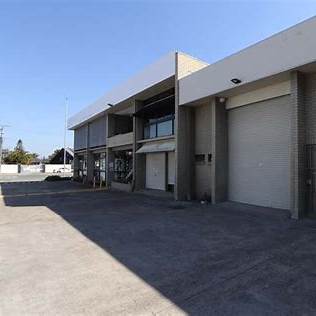
Is It the Right Time to Sell Your Commercial Property in Bundall?
Will buyers see your property as low-risk, well-performing, and easy to finance right now — or will waiting improve (or worsen) that story?
Bundall is one of the Gold Coast’s most practical commercial hubs. It attracts a mix of office users, service businesses, trade-style operators and light industrial users, largely because it’s central, easy to access, and tightly held in parts. That mix can work in your favour when you sell — but only if you choose the right time and position the asset properly.
Below are three factors that matter most: market trends, property performance, and interest rates — plus what to do if you receive the first offer and you’re stuck wondering “accept first offer or wait?”
1) Market trends: is demand strong for your type of asset?
Commercial property moves in lanes, not one big wave. In Bundall, demand typically varies by asset type:
Office suites / whole floors (professional services, medical/admin, owner-occupiers)
Showroom / service commercial (visibility, parking, easy customer access)
Light industrial / trade units (warehouse + small office, roller door, truck access)
A strong sign it may be a good time to sell is when you’re seeing:
consistent enquiry that quickly gets to “send the lease / outgoings”
buyers asking about settlement timing and conditions early
multiple inspection requests close together
Gold Coast market research has continued to track activity across office, industrial/logistics and retail, with local drivers like infrastructure investment and population/business growth supporting ongoing interest.
On the office side, industry commentary around Gold Coast vacancy has highlighted how constrained quality space can influence competition for well-located assets.
Bundall-specific angle: if your property suits both investors and owner-occupiers, you often get a broader buyer pool — and broader pools usually mean better negotiation power.
2) Property performance: what does your asset look like “on paper”?
Buyers don’t just buy a building. They buy certainty.
Before you decide to sell now or wait, review the property like a buyer (and their bank) would:
If it’s tenanted
Lease term remaining: longer, cleaner terms typically feel safer
Rent increases: clear annual increases or market reviews are attractive
Outgoings: clean recoveries and tidy records reduce buyer fear
Tenant stability: payment history and business type matter more than most owners realise
If it’s vacant or owner-occupied
Flexibility: can different business types use it without heavy changes?
Access & parking: simple access often beats “pretty” design
Presentation: lighting, entry, amenities, and general maintenance
Compliance: fire/safety documentation and approvals ready to go
A simple way to lift buyer confidence fast is to prepare a one-page “buyer pack”:
rent schedule (or occupancy plan)
outgoings summary
key improvements and maintenance history
what’s included (fit-out, racking, equipment exclusions)
If your property is performing well and the paperwork is clean, it can be the right time to sell because buyers pay more for low-friction deals.
3) Interest rates: why they matter even if you aren’t borrowing
Interest rates affect:
what buyers can afford, and
what investors will pay for the income (yield expectations).
The Reserve Bank of Australia publishes the cash rate target and update timing, which helps set the broader lending tone.
In plain English: when funding feels tighter or uncertain, buyers get picky and valuations can be conservative. When confidence improves, competition usually lifts.
So the goal isn’t to “predict rates.” It’s to make sure your deal still stacks up under today’s finance reality — especially with clean income, clean condition, and clean terms.
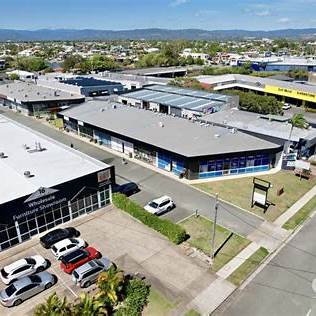
Bottom-blog image (insert here): a Bundall aerial showing the broader commercial hub (finishes the article with local context).
If you get the first offer: accept first offer or wait?
Even though this is commercial, owners still Google phrases like “accept first offer or wait” and even “first offer selling house” because the same fear kicks in: What if I take it and I could’ve got more?
Here’s the practical test:
The first offer is often worth taking (or negotiating hard) when:
it’s close to fair value for today’s market
the buyer is credible (finance-ready, sensible timeframes)
there isn’t strong competing enquiry behind them
You’re usually better to wait (or counter firmly) when:
multiple buyers are active and asking detailed questions
the offer has long, loose conditions
the buyer is clearly “testing you” because you haven’t run a competitive process
A good strategy is controlled competition: tight timeframes, clear information, and a pricing approach that gets buyers moving — not drifting.
Want a clear Bundall sell-now-or-wait answer?
If you’re considering selling your commercial property, we’ll give you a clear, evidence-based plan grounded in buyer demand, comparable results, and how your property will be assessed by valuers and lenders.
That means no guesswork, no over-promising — just a practical strategy designed to secure the best possible outcome in today’s market.
Disclaimer
This article is general information only and does not constitute financial, legal, or real estate advice. Market conditions, lending settings, buyer demand, and pricing can change quickly and vary by property type, lease profile, and exact location. You should obtain independent professional advice and a property-specific appraisal before deciding to sell or hold.