South-East QLD (Gold Coast, Brisbane)
Property News/Blog
Nortons Blog
Nortons Blog
Fresh Posts & Real Estate Updates

Why should Kelvin Grove sellers rethink campaign structure in a mixed inner-city market?

Do Calamvale owners need a different selling approach when buyers are comparing size, practicality, and school access?

What makes Mermaid Waters pricing harder to judge than it first appears?

How can Mermaid Beach sellers balance prestige, lifestyle pull, and commercial edge in one campaign?

When is Tugun the kind of suburb where subtle presentation beats overcapitalising for sale? Selling in Tugun often creates a familiar seller dilemma. Owners can see that presentation matters in a coastal suburb, but they are unsure how far to go before the market stops rewarding the extra work. Do you refresh everything, replace half the finishes, restyle the home heavily and try to chase a premium presentation standard? Or do you stay lighter, cleaner and more restrained? In many Tugun campaigns, subtle presentation wins because buyers are not necessarily looking for theatrical polish. They are often looking for a home that feels honest, easy and consistent with the relaxed coastal setting. That does not mean underpreparing. It means choosing presentation work that reduces hesitation without pushing the home into unnecessary overcapitalisation. Buyers respond to ease more than excessive polish Tugun buyers usually want a property that feels simple to step into. They are reading presentation through a practical coastal lens. Does the home feel light, calm and well cared for? Does it look easy to enjoy? Does it carry obvious deferred maintenance or does it feel settled? These questions matter more than whether every finish has been replaced with the latest design trend. That is why subtle presentation can work so well. Clean walls, resolved repairs, tidy outdoor areas, improved light, clearer room use and calmer styling often create more confidence than expensive cosmetic change that does not meaningfully improve how the property feels. Spend where buyers hesitate, not where sellers overthink The most useful pre-sale spending usually targets the issues buyers are most likely to fixate on. In Tugun, that might mean weathered external paint, tired outdoor areas, worn flooring in key zones, poor lighting, dated wet-area presentation or visible coastal wear that makes the home feel more effort-heavy than it really is. These are the things that can quietly drag negotiations down. By contrast, a full kitchen replacement, an expensive fit-out refresh or broad design-led improvements may not always return what the seller hopes. Good preparation is not about maximum spending. It is about maximum clarity. Coastal wear should be handled calmly and early One reason Tugun rewards subtle preparation is that buyers notice wear quickly in coastal environments. Rusting hardware, faded surfaces, swollen cabinetry, tired decks, weathered fencing or neglected outdoor fittings can all create the impression that the home may need more work than advertised. Addressing those issues sensibly can lift confidence without forcing a full-scale renovation. This is where restrained improvement often beats overcapitalising. Buyers appreciate signs that the property has been maintained. They do not always require every element to look brand new. Outdoor feel matters as much as internal finish In Tugun, presentation is not confined to the rooms inside the house. Entry sequence, balcony or deck usability, planting, yard neatness, outdoor seating areas and general openness all affect how the home is read. Coastal buyers often want the outside of the property to feel usable, relaxed and consistent with the lifestyle promise of the suburb. Again, this does not mean elaborate landscaping or resort-style staging. It means the outdoor experience should feel ready to enjoy. Often, simple changes do that more effectively than expensive ones. Overcapitalising can narrow the campaign Some sellers assume that the more they spend, the more buyers will pay. That is not always how it works. In Tugun, overcapitalising can sometimes create a mismatch between the level of finish and the broader comparison market. Buyers may admire the work but still resist the price if the property no longer feels aligned with what they are comparing it to. Subtle presentation tends to avoid that trap. It supports the sale without forcing the campaign to carry a level of expectation the surrounding market may not consistently support. Good presentation should strengthen the story, not replace it The strongest Tugun campaigns still need a clear property story. Presentation should reinforce that story rather than try to become the story itself. If the home’s strength is relaxed coastal ease, then the preparation should make that easier to feel. If the strength is simplicity and low-maintenance living, presentation should make that obvious. Buyers respond better when the work feels aligned with the home rather than layered on top of it. That is why Tugun is often the kind of suburb where subtle presentation beats overcapitalising. The goal is not to impress buyers with effort. It is to make the property easier to trust, easier to understand and easier to want. FAQ 1: Should I renovate fully before selling in Tugun? Not usually. Targeted preparation often works better than broad renovation if the goal is to improve confidence without overspending. FAQ 2: Do buyers notice small coastal maintenance issues? Yes. Minor signs of coastal wear can influence buyer confidence more than sellers often expect. FAQ 3: Is styling important in Tugun? It can help, but calm, natural presentation usually matters more than heavy styling or overly polished staging. FAQ 4: Can subtle preparation still support a strong price? Yes. Buyers often respond strongly to homes that feel well cared for, honest and easy rather than overly manipulated for sale. For direct advice on preparing your property for sale in Tugun, speak with Steven Norton or Lawrence Norton at Nortons Real Estate and view our services . Steven Norton – 0488 496 777 Lawrence Norton – 0415 279 807 nortons.re@gmail.com www.nortonsrealestate.com Disclaimer: This article is general information only and does not constitute legal, financial, taxation, planning, valuation, or property advice. Any commentary about likely buyer behaviour, campaign strategy, pricing, negotiation, or sale outcomes is general in nature and may not apply to your property or circumstances. You should obtain independent professional advice and a tailored appraisal before making any property decision.

Why does Labrador property value shift so noticeably between similar homes near the same coastline?

What should Hope Island owners control first when selling in a prestige-minded market?

How much strategy do Shailer Park owners really need before they choose an agent and go live?

What causes Elanora sellers to win stronger attention with one launch and lose it with another?

Will Coolangatta sellers get a stronger result from local demand alone or broader campaign reach?

Where can Currumbin Waters sellers gain leverage before the first inspection even happens? By the time the first inspection opens in Currumbin Waters, many of the sale’s most important leverage points have already been set. Sellers sometimes assume leverage begins once buyers start walking through the home and making comments. In reality, leverage often starts much earlier. It is created through how the property is positioned, how carefully the comparison set is understood, how the home is prepared for photography, how the price is framed, and how much control the seller has over the early story of the campaign. In a suburb where buyers may be weighing family practicality, lifestyle ease, presentation and perceived value all at once, those early settings matter. Sellers who wait until inspection day to think strategically are usually starting too late. Leverage starts with a clearer property story One of the easiest ways to weaken a campaign is to go live without deciding what the property should mean to the market. Is it a low-maintenance move? A practical family home? A better-positioned alternative to nearby competition? A residence that feels easier and more complete than others in its bracket? If the story is vague, the campaign invites weaker comparisons. Buyers decide for themselves what the property is, and they often do that through the lens of price alone. A sharper property story creates leverage because it gives buyers a cleaner reason to remember the home before they have even set foot inside. Photography and preparation influence leverage more than sellers think First impressions online shape who arrives at the inspection and what expectations they bring with them. If the home is not visually ready, the seller starts the campaign from a compromised position. Buyers may still come through, but they often arrive looking for the weaknesses that the advertising hinted at. By contrast, a home that is well prepared, properly lit, tidied, and photographed honestly can create more favourable early momentum. This is not about creating artificial perfection. It is about making sure the images support the real strengths of the property. When early impressions are stronger, the seller begins negotiations later from a firmer platform. Price framing can either build or erode early power Leverage is also shaped by how the price conversation begins. A vague campaign can attract noise without real intent. A misjudged price position can create caution before momentum forms. Currumbin Waters sellers often do better when price framing aligns with the home’s true comparison set and likely buyer pool. That makes the campaign feel more grounded and helps the right buyers engage with confidence. Good price framing is not the same as low pricing. It is about clarity. The clearer the market can understand where the property sits, the easier it becomes to turn attention into meaningful competition. Control the comparison field before buyers do it for you Every property is compared, but the seller still has some influence over how that comparison happens. Before launch, it is worth asking which nearby properties buyers are likely to stack this one against and why. Is the campaign showing enough of the features that make it stronger? Are the more useful spaces being highlighted properly? Are the likely objections being softened through preparation or honest positioning? This kind of early thinking creates leverage because it narrows the space for the market to define the property unfairly. Buyers will still compare, but they will be doing so against a clearer, better-managed narrative. Seller readiness is part of leverage too Leverage does not belong only to the property. It also belongs to the seller. If you have not thought through timing, settlement preferences, documentation, or your response to likely buyer pressure, the campaign can become reactive very quickly. A buyer only needs to sense a little uncertainty before they start testing harder. Currumbin Waters sellers often gain more control simply by entering the market with clearer expectations. When the seller knows the preferred path and the likely negotiation boundaries, early interest becomes easier to manage. The first inspection is not the first move By the time the first inspection happens, buyers are already carrying impressions formed by the campaign. They already have a value range in mind. They already suspect what kind of property this is and how it compares. That is why leverage created beforehand matters so much. It shapes the tone of everything that follows. In Currumbin Waters, the strongest sellers are often the ones who understand that leverage is built before the doors open. It comes from better preparation, clearer positioning, stronger price framing and more disciplined control of the story from day one. FAQ 1: Can leverage really be created before inspections start? Yes. Early positioning, price framing, photography and seller readiness all affect the tone of buyer response before the first inspection. FAQ 2: Does better preparation improve negotiating power? Usually, yes. It reduces avoidable objections and helps buyers engage with more confidence. FAQ 3: Should I compare my property to nearby homes before launch? Absolutely. Understanding the real comparison field helps shape pricing, presentation and campaign messaging. FAQ 4: Is seller readiness as important as property readiness? Often it is. A well-prepared seller usually handles early feedback and negotiation more effectively. For tailored advice on selling in Currumbin Waters, contact Steven Norton or Lawrence Norton at Nortons Real Estate or view our services . Steven Norton – 0488 496 777 Lawrence Norton – 0415 279 807 nortons.re@gmail.com www.nortonsrealestate.com Disclaimer: This article is general information only and does not constitute legal, financial, taxation, planning, valuation, or property advice. Any commentary about likely buyer behaviour, campaign strategy, pricing, negotiation, or sale outcomes is general in nature and may not apply to your property or circumstances. You should obtain independent professional advice and a tailored appraisal before making any property decision.

Does Currumbin value turn more on house quality, location feel, or local scarcity?

Can Daisy Hill homeowners sell well without chasing every cosmetic trend before launch?

How should Coomera owners prepare for buyer scrutiny in a market full of comparison stock?

Why do Fortitude Valley commercial campaigns need sharper positioning before they need more advertising?

Can Eagleby sellers move decisively without accepting a softer result?

Is Springwood commercial property better sold on income, location, flexibility, or redevelopment angle?

How do Bundall commercial owners position a property for sale without blurring its best-use story?

What must Clear Island Waters sellers address before photography, inspections, and buyer scrutiny begin?

When should Burleigh Waters owners lean into family appeal and when should they stay more neutral?

Is Burleigh Heads best sold through broad exposure or a tighter, more curated campaign?

What changes Biggera Waters appraisals when outlook, access, and buyer mix all pull differently?

How can New Farm owners protect price while still creating competition?

Which Rochedale site owners are likely to attract developer interest before they decide how to sell? Not every larger holding in Rochedale is automatically a developer site, and not every owner who receives site-style enquiry should immediately change the sale strategy. That is where many landowners get caught. The property starts attracting questions about frontage, neighbouring lots, access, or broader potential, and suddenly the owner feels pressure to market it as something bigger than it may really be. Sometimes that is the right move. Sometimes it is not. Rochedale site owners are most likely to attract genuine developer interest when the property offers characteristics that make future use easier to imagine and easier to assess. The key is to recognise those characteristics early without letting the campaign drift into unsupported assumptions. The first thing to understand is that developer interest usually follows logic, not excitement. Developers are rarely responding to land size alone. They are looking at configuration, access, surrounding context, the ease or difficulty of assembly, and whether the existing holding creates a realistic pathway to something more valuable than its current use. That means owners should be careful about assuming that every large residential property deserves a site campaign. Some properties are better sold as premium homes or land-rich residences because that is where the strongest current market sits. Rochedale is one of those areas where site interest can appear selectively, which makes seller judgement especially important. A property may draw attention because it sits in a part of the suburb that feels more strategic, because neighbouring patterns make buyers think more broadly, or because the land itself reads as functional for something beyond ordinary residential use. But none of that should be marketed loosely. Stronger campaigns usually begin with a grounded review of what the property has, what type of buyer might respond, and how the opportunity should be described without inflating it. Owners likely to attract genuine developer interest are usually the ones whose property offers clearer land logic. That could be useful shape, workable access, lower complexity in how the site reads, or a context that makes a more strategic buyer willing to investigate further. It does not mean every such property should be taken straight to a developer-only campaign. In some cases, the better path is a hybrid approach that preserves broader demand while still presenting the site qualities to the right audience. Presentation still matters, even in site-led conversations. Developers and site-minded buyers do not ignore condition entirely. They still read access, manageability, and how much uncertainty the property appears to carry. Overgrown areas, unclear site readability, or poor presentation around key access points can make a holding feel more difficult than it is. Sellers do not need to over-polish a site, but they should make it easier to assess. Another major consideration is how much information to assemble before launch. Owners do not need to overstate what the site can do, and they should avoid presenting unverified claims as fact. But some early preparation helps. A landowner who understands the likely buyer types and has thought through the property’s stronger site attributes is in a far better position than one who only reacts after enquiries start arriving. That preparation also protects against underselling because the seller is less likely to confuse speculative interest with serious interest. Pricing is where many Rochedale landowners become vulnerable. The existence of some developer enquiry does not automatically justify aggressive site pricing. Equally, marketing the property only as a standard residential home can leave future value underexplored. This is why tailored strategy matters. The best result often sits between those extremes. The Rochedale site owners most likely to attract developer interest are not simply the ones with more land. They are the ones whose holdings make strategic sense to the right buyer. Recognising that before deciding how to sell is what helps protect both opportunity and credibility. FAQ 1: Should I market my Rochedale property only to developers? Not always. Some properties benefit from a wider campaign that still includes targeted site-style outreach where appropriate. FAQ 2: Does a larger block automatically mean stronger developer interest? No. Buyers usually care about land logic, access, shape and context, not just size. FAQ 3: Do I need planning advice before selling? Sometimes it is helpful, especially if site potential may influence the sale strategy, but the right level of preparation depends on the property. FAQ 4: Can a residential home still achieve a stronger result than a site campaign? Yes. If the property’s strongest current market is residential, forcing a site angle can weaken the campaign. If you own property in Rochedale and want clear sale advice, contact Steven Norton or Lawrence Norton at Nortons Real Estate or view our services . Steven Norton – 0488 496 777 Lawrence Norton – 0415 279 807 nortons.re@gmail.com www.nortonsrealestate.com Disclaimer: This article is general information only and does not constitute legal, financial, taxation, planning, valuation, or property advice. Any commentary about likely buyer behaviour, campaign strategy, pricing, negotiation, or sale outcomes is general in nature and may not apply to your property or circumstances. You should obtain independent professional advice and a tailored appraisal before making any property decision.

Do Benowa owners gain more value from presentation, position, or the story built around both?

Why should Kelvin Grove sellers rethink campaign structure in a mixed inner-city market?

Do Calamvale owners need a different selling approach when buyers are comparing size, practicality, and school access?

What makes Mermaid Waters pricing harder to judge than it first appears?

How can Mermaid Beach sellers balance prestige, lifestyle pull, and commercial edge in one campaign?

When is Tugun the kind of suburb where subtle presentation beats overcapitalising for sale? Selling in Tugun often creates a familiar seller dilemma. Owners can see that presentation matters in a coastal suburb, but they are unsure how far to go before the market stops rewarding the extra work. Do you refresh everything, replace half the finishes, restyle the home heavily and try to chase a premium presentation standard? Or do you stay lighter, cleaner and more restrained? In many Tugun campaigns, subtle presentation wins because buyers are not necessarily looking for theatrical polish. They are often looking for a home that feels honest, easy and consistent with the relaxed coastal setting. That does not mean underpreparing. It means choosing presentation work that reduces hesitation without pushing the home into unnecessary overcapitalisation. Buyers respond to ease more than excessive polish Tugun buyers usually want a property that feels simple to step into. They are reading presentation through a practical coastal lens. Does the home feel light, calm and well cared for? Does it look easy to enjoy? Does it carry obvious deferred maintenance or does it feel settled? These questions matter more than whether every finish has been replaced with the latest design trend. That is why subtle presentation can work so well. Clean walls, resolved repairs, tidy outdoor areas, improved light, clearer room use and calmer styling often create more confidence than expensive cosmetic change that does not meaningfully improve how the property feels. Spend where buyers hesitate, not where sellers overthink The most useful pre-sale spending usually targets the issues buyers are most likely to fixate on. In Tugun, that might mean weathered external paint, tired outdoor areas, worn flooring in key zones, poor lighting, dated wet-area presentation or visible coastal wear that makes the home feel more effort-heavy than it really is. These are the things that can quietly drag negotiations down. By contrast, a full kitchen replacement, an expensive fit-out refresh or broad design-led improvements may not always return what the seller hopes. Good preparation is not about maximum spending. It is about maximum clarity. Coastal wear should be handled calmly and early One reason Tugun rewards subtle preparation is that buyers notice wear quickly in coastal environments. Rusting hardware, faded surfaces, swollen cabinetry, tired decks, weathered fencing or neglected outdoor fittings can all create the impression that the home may need more work than advertised. Addressing those issues sensibly can lift confidence without forcing a full-scale renovation. This is where restrained improvement often beats overcapitalising. Buyers appreciate signs that the property has been maintained. They do not always require every element to look brand new. Outdoor feel matters as much as internal finish In Tugun, presentation is not confined to the rooms inside the house. Entry sequence, balcony or deck usability, planting, yard neatness, outdoor seating areas and general openness all affect how the home is read. Coastal buyers often want the outside of the property to feel usable, relaxed and consistent with the lifestyle promise of the suburb. Again, this does not mean elaborate landscaping or resort-style staging. It means the outdoor experience should feel ready to enjoy. Often, simple changes do that more effectively than expensive ones. Overcapitalising can narrow the campaign Some sellers assume that the more they spend, the more buyers will pay. That is not always how it works. In Tugun, overcapitalising can sometimes create a mismatch between the level of finish and the broader comparison market. Buyers may admire the work but still resist the price if the property no longer feels aligned with what they are comparing it to. Subtle presentation tends to avoid that trap. It supports the sale without forcing the campaign to carry a level of expectation the surrounding market may not consistently support. Good presentation should strengthen the story, not replace it The strongest Tugun campaigns still need a clear property story. Presentation should reinforce that story rather than try to become the story itself. If the home’s strength is relaxed coastal ease, then the preparation should make that easier to feel. If the strength is simplicity and low-maintenance living, presentation should make that obvious. Buyers respond better when the work feels aligned with the home rather than layered on top of it. That is why Tugun is often the kind of suburb where subtle presentation beats overcapitalising. The goal is not to impress buyers with effort. It is to make the property easier to trust, easier to understand and easier to want. FAQ 1: Should I renovate fully before selling in Tugun? Not usually. Targeted preparation often works better than broad renovation if the goal is to improve confidence without overspending. FAQ 2: Do buyers notice small coastal maintenance issues? Yes. Minor signs of coastal wear can influence buyer confidence more than sellers often expect. FAQ 3: Is styling important in Tugun? It can help, but calm, natural presentation usually matters more than heavy styling or overly polished staging. FAQ 4: Can subtle preparation still support a strong price? Yes. Buyers often respond strongly to homes that feel well cared for, honest and easy rather than overly manipulated for sale. For direct advice on preparing your property for sale in Tugun, speak with Steven Norton or Lawrence Norton at Nortons Real Estate and view our services . Steven Norton – 0488 496 777 Lawrence Norton – 0415 279 807 nortons.re@gmail.com www.nortonsrealestate.com Disclaimer: This article is general information only and does not constitute legal, financial, taxation, planning, valuation, or property advice. Any commentary about likely buyer behaviour, campaign strategy, pricing, negotiation, or sale outcomes is general in nature and may not apply to your property or circumstances. You should obtain independent professional advice and a tailored appraisal before making any property decision.

Why does Labrador property value shift so noticeably between similar homes near the same coastline?

What should Hope Island owners control first when selling in a prestige-minded market?

How much strategy do Shailer Park owners really need before they choose an agent and go live?

What causes Elanora sellers to win stronger attention with one launch and lose it with another?

Will Coolangatta sellers get a stronger result from local demand alone or broader campaign reach?

Where can Currumbin Waters sellers gain leverage before the first inspection even happens? By the time the first inspection opens in Currumbin Waters, many of the sale’s most important leverage points have already been set. Sellers sometimes assume leverage begins once buyers start walking through the home and making comments. In reality, leverage often starts much earlier. It is created through how the property is positioned, how carefully the comparison set is understood, how the home is prepared for photography, how the price is framed, and how much control the seller has over the early story of the campaign. In a suburb where buyers may be weighing family practicality, lifestyle ease, presentation and perceived value all at once, those early settings matter. Sellers who wait until inspection day to think strategically are usually starting too late. Leverage starts with a clearer property story One of the easiest ways to weaken a campaign is to go live without deciding what the property should mean to the market. Is it a low-maintenance move? A practical family home? A better-positioned alternative to nearby competition? A residence that feels easier and more complete than others in its bracket? If the story is vague, the campaign invites weaker comparisons. Buyers decide for themselves what the property is, and they often do that through the lens of price alone. A sharper property story creates leverage because it gives buyers a cleaner reason to remember the home before they have even set foot inside. Photography and preparation influence leverage more than sellers think First impressions online shape who arrives at the inspection and what expectations they bring with them. If the home is not visually ready, the seller starts the campaign from a compromised position. Buyers may still come through, but they often arrive looking for the weaknesses that the advertising hinted at. By contrast, a home that is well prepared, properly lit, tidied, and photographed honestly can create more favourable early momentum. This is not about creating artificial perfection. It is about making sure the images support the real strengths of the property. When early impressions are stronger, the seller begins negotiations later from a firmer platform. Price framing can either build or erode early power Leverage is also shaped by how the price conversation begins. A vague campaign can attract noise without real intent. A misjudged price position can create caution before momentum forms. Currumbin Waters sellers often do better when price framing aligns with the home’s true comparison set and likely buyer pool. That makes the campaign feel more grounded and helps the right buyers engage with confidence. Good price framing is not the same as low pricing. It is about clarity. The clearer the market can understand where the property sits, the easier it becomes to turn attention into meaningful competition. Control the comparison field before buyers do it for you Every property is compared, but the seller still has some influence over how that comparison happens. Before launch, it is worth asking which nearby properties buyers are likely to stack this one against and why. Is the campaign showing enough of the features that make it stronger? Are the more useful spaces being highlighted properly? Are the likely objections being softened through preparation or honest positioning? This kind of early thinking creates leverage because it narrows the space for the market to define the property unfairly. Buyers will still compare, but they will be doing so against a clearer, better-managed narrative. Seller readiness is part of leverage too Leverage does not belong only to the property. It also belongs to the seller. If you have not thought through timing, settlement preferences, documentation, or your response to likely buyer pressure, the campaign can become reactive very quickly. A buyer only needs to sense a little uncertainty before they start testing harder. Currumbin Waters sellers often gain more control simply by entering the market with clearer expectations. When the seller knows the preferred path and the likely negotiation boundaries, early interest becomes easier to manage. The first inspection is not the first move By the time the first inspection happens, buyers are already carrying impressions formed by the campaign. They already have a value range in mind. They already suspect what kind of property this is and how it compares. That is why leverage created beforehand matters so much. It shapes the tone of everything that follows. In Currumbin Waters, the strongest sellers are often the ones who understand that leverage is built before the doors open. It comes from better preparation, clearer positioning, stronger price framing and more disciplined control of the story from day one. FAQ 1: Can leverage really be created before inspections start? Yes. Early positioning, price framing, photography and seller readiness all affect the tone of buyer response before the first inspection. FAQ 2: Does better preparation improve negotiating power? Usually, yes. It reduces avoidable objections and helps buyers engage with more confidence. FAQ 3: Should I compare my property to nearby homes before launch? Absolutely. Understanding the real comparison field helps shape pricing, presentation and campaign messaging. FAQ 4: Is seller readiness as important as property readiness? Often it is. A well-prepared seller usually handles early feedback and negotiation more effectively. For tailored advice on selling in Currumbin Waters, contact Steven Norton or Lawrence Norton at Nortons Real Estate or view our services . Steven Norton – 0488 496 777 Lawrence Norton – 0415 279 807 nortons.re@gmail.com www.nortonsrealestate.com Disclaimer: This article is general information only and does not constitute legal, financial, taxation, planning, valuation, or property advice. Any commentary about likely buyer behaviour, campaign strategy, pricing, negotiation, or sale outcomes is general in nature and may not apply to your property or circumstances. You should obtain independent professional advice and a tailored appraisal before making any property decision.

Does Currumbin value turn more on house quality, location feel, or local scarcity?

Can Daisy Hill homeowners sell well without chasing every cosmetic trend before launch?

How should Coomera owners prepare for buyer scrutiny in a market full of comparison stock?

Why do Fortitude Valley commercial campaigns need sharper positioning before they need more advertising?

Can Eagleby sellers move decisively without accepting a softer result?

Is Springwood commercial property better sold on income, location, flexibility, or redevelopment angle?

How do Bundall commercial owners position a property for sale without blurring its best-use story?

What must Clear Island Waters sellers address before photography, inspections, and buyer scrutiny begin?

When should Burleigh Waters owners lean into family appeal and when should they stay more neutral?

Is Burleigh Heads best sold through broad exposure or a tighter, more curated campaign?

What changes Biggera Waters appraisals when outlook, access, and buyer mix all pull differently?

How can New Farm owners protect price while still creating competition?

Which Rochedale site owners are likely to attract developer interest before they decide how to sell? Not every larger holding in Rochedale is automatically a developer site, and not every owner who receives site-style enquiry should immediately change the sale strategy. That is where many landowners get caught. The property starts attracting questions about frontage, neighbouring lots, access, or broader potential, and suddenly the owner feels pressure to market it as something bigger than it may really be. Sometimes that is the right move. Sometimes it is not. Rochedale site owners are most likely to attract genuine developer interest when the property offers characteristics that make future use easier to imagine and easier to assess. The key is to recognise those characteristics early without letting the campaign drift into unsupported assumptions. The first thing to understand is that developer interest usually follows logic, not excitement. Developers are rarely responding to land size alone. They are looking at configuration, access, surrounding context, the ease or difficulty of assembly, and whether the existing holding creates a realistic pathway to something more valuable than its current use. That means owners should be careful about assuming that every large residential property deserves a site campaign. Some properties are better sold as premium homes or land-rich residences because that is where the strongest current market sits. Rochedale is one of those areas where site interest can appear selectively, which makes seller judgement especially important. A property may draw attention because it sits in a part of the suburb that feels more strategic, because neighbouring patterns make buyers think more broadly, or because the land itself reads as functional for something beyond ordinary residential use. But none of that should be marketed loosely. Stronger campaigns usually begin with a grounded review of what the property has, what type of buyer might respond, and how the opportunity should be described without inflating it. Owners likely to attract genuine developer interest are usually the ones whose property offers clearer land logic. That could be useful shape, workable access, lower complexity in how the site reads, or a context that makes a more strategic buyer willing to investigate further. It does not mean every such property should be taken straight to a developer-only campaign. In some cases, the better path is a hybrid approach that preserves broader demand while still presenting the site qualities to the right audience. Presentation still matters, even in site-led conversations. Developers and site-minded buyers do not ignore condition entirely. They still read access, manageability, and how much uncertainty the property appears to carry. Overgrown areas, unclear site readability, or poor presentation around key access points can make a holding feel more difficult than it is. Sellers do not need to over-polish a site, but they should make it easier to assess. Another major consideration is how much information to assemble before launch. Owners do not need to overstate what the site can do, and they should avoid presenting unverified claims as fact. But some early preparation helps. A landowner who understands the likely buyer types and has thought through the property’s stronger site attributes is in a far better position than one who only reacts after enquiries start arriving. That preparation also protects against underselling because the seller is less likely to confuse speculative interest with serious interest. Pricing is where many Rochedale landowners become vulnerable. The existence of some developer enquiry does not automatically justify aggressive site pricing. Equally, marketing the property only as a standard residential home can leave future value underexplored. This is why tailored strategy matters. The best result often sits between those extremes. The Rochedale site owners most likely to attract developer interest are not simply the ones with more land. They are the ones whose holdings make strategic sense to the right buyer. Recognising that before deciding how to sell is what helps protect both opportunity and credibility. FAQ 1: Should I market my Rochedale property only to developers? Not always. Some properties benefit from a wider campaign that still includes targeted site-style outreach where appropriate. FAQ 2: Does a larger block automatically mean stronger developer interest? No. Buyers usually care about land logic, access, shape and context, not just size. FAQ 3: Do I need planning advice before selling? Sometimes it is helpful, especially if site potential may influence the sale strategy, but the right level of preparation depends on the property. FAQ 4: Can a residential home still achieve a stronger result than a site campaign? Yes. If the property’s strongest current market is residential, forcing a site angle can weaken the campaign. If you own property in Rochedale and want clear sale advice, contact Steven Norton or Lawrence Norton at Nortons Real Estate or view our services . Steven Norton – 0488 496 777 Lawrence Norton – 0415 279 807 nortons.re@gmail.com www.nortonsrealestate.com Disclaimer: This article is general information only and does not constitute legal, financial, taxation, planning, valuation, or property advice. Any commentary about likely buyer behaviour, campaign strategy, pricing, negotiation, or sale outcomes is general in nature and may not apply to your property or circumstances. You should obtain independent professional advice and a tailored appraisal before making any property decision.

Do Benowa owners gain more value from presentation, position, or the story built around both?

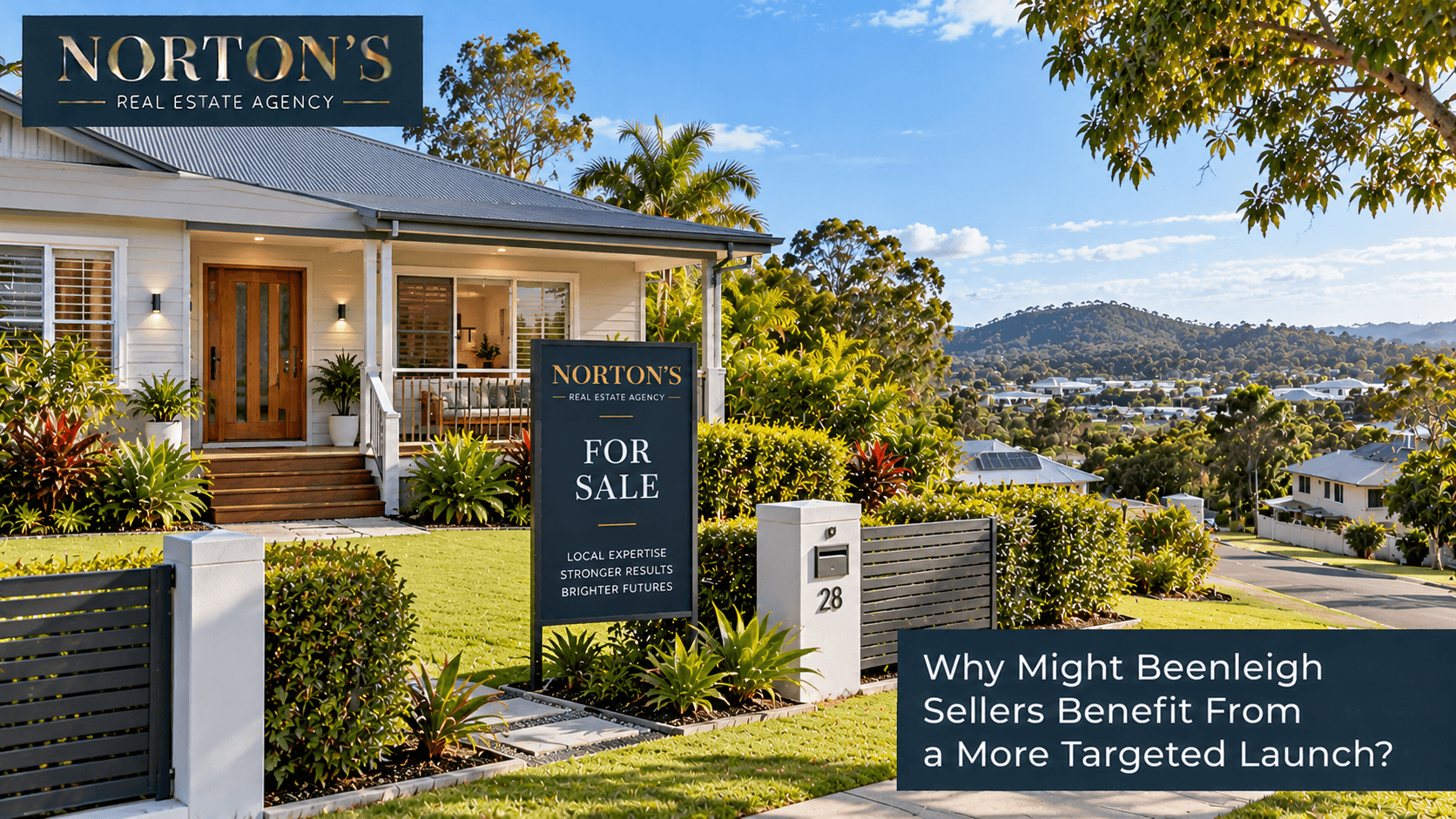
How are Beenleigh sellers using sharper campaign strategy to attract better-qualified buyers?

Why might Loganholme owners benefit from a more deliberate sale plan than a quick list-and-wait approach?
Free Apprisal
Let’s Make Your Property Journey Effortless
Have questions or ready to take the next step? Whether you’re looking to buy, sell, invest, or arrange a free appraisal, our team is here to guide you every step of the way. Let’s turn your property goals into reality.