Carrara Commercial Market Update (2026)
Carrara Commercial Market Update (2026) — Rents, Yields, Buyer Demand & What Sellers Need to Know
Carrara is one of the Gold Coast’s most “quietly powerful” commercial suburbs. It’s not built around a traditional main street retail strip. Instead, Carrara’s commercial strength comes from industrial and service-commercial land, major sports and events infrastructure, and consistent local visitation drivers (including established markets and venue-based foot traffic).
In 2026, the Carrara commercial property market is being shaped by three big themes:
🏭 Industrial + trade services resilience (warehouse, workshop, distribution, service-commercial users)
🏟️ Events and precinct investment supporting local business demand and visitation
📈 Shifting yield expectations as national research points to improving investment conditions and modest cap rate compression in selected sectors
This update is designed for owners considering selling a Carrara commercial property, repositioning a tenancy, or assessing whether now is the right time to go to market with an industrial or service-commercial asset.
📍 Why Carrara’s commercial market behaves differently
Carrara sits in a strategic “middle ring” position on the Gold Coast—close to major movement corridors and anchored by a nationally significant stadium and sports precinct. Carrara Stadium (now known as People First Stadium) is a major venue with a long event history and ongoing relevance to the city’s sporting economy.
Carrara also hosts the City of Gold Coast’s Gold Coast Sports Precinct at 296 Nerang Broadbeach Road, reinforcing the suburb’s role as an employment and activity node rather than a purely residential catchment.
What this means for commercial property:
Carrara demand is less about “walk-up retail” and more about functionality, access, hardstand/parking, clearance, and the ability to service customers efficiently—the things industrial and service-commercial tenants pay for.
🏭 Industrial & Service-Commercial: the backbone of Carrara demand
Carrara is widely recognised (by how the market uses it) as a practical industrial/service-commercial location—warehouses, workshops, trade suppliers, storage, and logistics-adjacent businesses.
What tenants are prioritising in 2026
Across the Gold Coast, industrial tenants have become far more selective about features that reduce operating friction:
🚚 Easy vehicle access (turning circles, driveway width, delivery vehicle fit)
📦 Clear-span warehouse + usable clearance
⚡ Three-phase power (where relevant to trade users)
🅿️ Parking + hardstand (staff + customer + fleet capacity)
📌 Signage exposure where the business relies on local visibility
Seller note: In Carrara, a “boring but functional” warehouse often outperforms a prettier building that compromises access, clearance, or parking.
📈 Yields and pricing: what CBRE’s February 2026 view signals (and what it means locally)
Nationally, February 2026 commentary and outlook signals improving market conditions and a gradual shift toward modest cap rate compression in selected sectors:
“House View” (Feb 2026) discusses cap rates compressing 5–15 bps in some retail segments, with logistics also flagged for mild compression in a similar band (conditions vary by market).
Pacific outlook projects investment volumes rising 5–10% in 2026 and cap rates tightening 25–40 bps through 2028 (asset-class dependent).
How this translates to Carrara yields
Carrara doesn’t price like a CBD office market. Buyers in Carrara tend to price risk through:
Lease term (WALE) + options
Tenant replaceability (how quickly can the space be re-let if vacated?)
Building utility (access, clearance, yard, power)
Capex risk (roof, slab, drainage, compliance items)
Vacant possession potential (owner-occupiers may pay more for the right opportunity)
So while national research points to improving sentiment, Carrara pricing still rewards certainty:
Clean leases + low capex surprises = stronger buyer competition
Short leases + unclear outgoings/maintenance = yield “buffers” (discounting)
👥 Buyer demand: who is buying in Carrara in 2026?
Carrara’s buyer pool is usually a blend of:
1) Owner-occupiers 🔑
Trade operators, service businesses, storage/logistics users, and operators scaling from smaller sheds.
They’ll pay for:
usability (access + layout)
timing flexibility (vacant possession or short lease tails)
signage exposure (where relevant)
2) Yield investors 📊
They’re buying the income stream and want:
stable tenant profile
clean lease terms
clear outgoings recovery
minimal capex surprises
3) Value-add buyers 🧰
They look for upside via:
under-rented leases
refurb/fit-out improvements
tenancy repositioning or subdivision potential (where lawful and feasible)
Carrara advantage: Owner-occupiers are often willing to price beyond pure “yield math” if the property solves a real operational need.
🏟️ Precinct investment and events economy: a local demand multiplier
Carrara’s stadium and sports infrastructure is not just a landmark—it’s an activity driver that supports surrounding service demand. People First Stadium is a major venue in Carrara.
The City’s sports precinct positioning also feeds into the broader “high performance sport hub” narrative, with Invest Gold Coast highlighting opportunities tied to the precinct.
Commercial impact (practical):
More event days = more demand for services nearby (food, supply, logistics, contractors)
Larger precinct planning = longer-term confidence (buyers like durable activity nodes)
🛒 Local visitation driver: Carrara Markets and the “signage advantage”
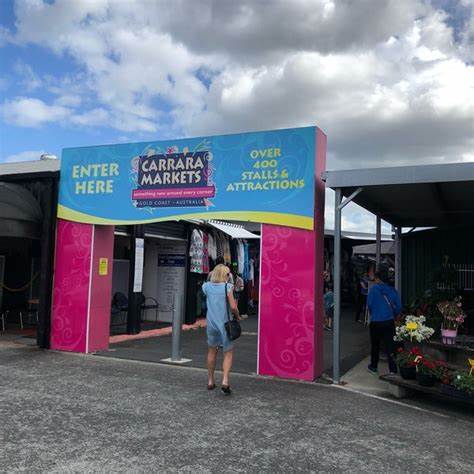
Carrara also benefits from established, high-recognition destinations like Carrara Markets, which function as a recurring visitation magnet and a branding landmark for the suburb.
Why it matters commercially:
High-recognition landmarks strengthen “mental map” location value
Businesses near well-known destinations often benefit from easier directions, stronger local awareness, and repeat visitation patterns
🚗 Accessibility and infrastructure: the “time cost” factor buyers price in
On the Gold Coast, major road investment and corridor upgrades influence commercial decisions because travel time affects staffing, deliveries, and customer convenience. Queensland’s Department of Transport and Main Roads confirms major works completed under the Pacific Motorway M1 upgrade program (including the Varsity Lakes to Tugun project).
Even when a specific upgrade isn’t inside Carrara, corridor capacity improvements influence:
distribution and service run efficiency
staff catchment size and reliability
overall confidence in industrial/service-commercial nodes
💼 Rents: what’s moving (without pretending every property is the same)
Carrara rent outcomes aren’t uniform—two assets 500 metres apart can perform differently depending on access and usability.
Rent pressure tends to be strongest where:
the property offers clear-span warehouse utility
access and parking are “easy” (no tight turns, no conflicts)
signage is available and useful
the space suits multiple tenant categories (high re-leasing confidence)
Tenants negotiate hardest where:
the building has limited functionality (awkward layout, low clearance, poor access)
capex is likely soon (roof, drainage, slab, roller doors)
outgoings are unclear or unusually high
✅ If you’re selling a Carrara commercial property: what lifts price fastest
Here are the high-impact moves that typically create buyer confidence (and reduce discounting):
📄 1) Make the lease story “buyer-ready”
Lease summary (term, options, reviews)
Outgoings recovery clarity
Make-good and maintenance responsibilities clearly stated
🧾 2) Remove “unknowns”
Capex summary: what’s been done, what’s pending
Compliance items addressed (where relevant to use)
🏗️ 3) Present the property for its real buyer
If it’s owner-occupier suitable: highlight vacant possession pathways and operational fit
If it’s investor-led: lead with income security and replaceability logic
📣 Call to Action — Norton’s Real Estate (Commercial Selling Agents)
If you’re considering selling your commercial property in Carrara, the strongest results usually come from matching the campaign to the correct buyer type (owner-occupier vs investor) and removing due diligence friction early.
Disclaimer
This article is general information only and does not constitute legal, financial, taxation or investment advice. Commercial property performance varies by asset type, lease terms, tenant quality, condition, outgoings, and micro-location. Independent advice and a property-specific appraisal should be obtained before making decisions.