Pimpama Commercial Market Update (Gold Coast North)
Pimpama Commercial Market Update (Gold Coast North) — Rents, Yields, Buyer Demand & What’s Driving the Next Wave (2026)
Pimpama has shifted from a “future growth suburb” into a fully active commercial corridor. The story here isn’t CBD offices or trophy retail strips — it’s service-based retail, medical, education-linked spending, and trade/industrial space riding one of Australia’s fastest-growing urban edges.
In 2026, the Pimpama commercial property market is being shaped by three forces:
Population-driven demand (more rooftops = more services, healthcare, childcare, food, convenience retail)
Transport/infrastructure uplift (better connectivity changes where businesses choose to locate)
Supply pressure and replacement cost (construction costs and limited well-located stock influence rents and yields)
Below is an on-the-ground update for owners and sellers: rents, yields, buyer demand, and what to do if you’re considering a sale or repositioning.
📍 Why Pimpama is behaving differently to “typical” suburban commercial markets
Pimpama sits inside a broader growth machine: the Gold Coast is forecast to add substantial population through to 2046, supporting ongoing demand for employment land, local centres and services.
Within this corridor, industry and developers continue to reference major long-term growth expectations for the Coomera–Pimpama catchment.
What that means commercially: Pimpama doesn’t need to “invent” demand — it absorbs it. When households move in, businesses follow: GP clinics, allied health, gyms, fast-casual, trades, showrooms, warehouse units, education support services, and local professional suites.
🏬 Retail & Town Centre Space: convenience + services are the main game
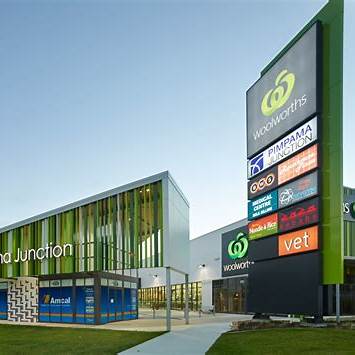
Pimpama’s retail leasing demand is anchored by district-style shopping, convenience strips, and service-based tenancies rather than high-fashion discretionary retail. Centres designed for everyday needs (supermarket, food, medical, gym, vet, allied services) are the ones that keep tenant enquiry consistent across cycles. The scale and tenant mix of Pimpama’s major centre development illustrates exactly that “services-first” model.
What we’re seeing in retail rents and deals (Pimpama-specific patterns)
Best-positioned space (frontage, high visibility, easy parking): firmer rent expectations, lower downtime
Secondary space (awkward access, poor exposure, higher fit-out cost): more negotiation on incentives, signage, and lease flexibility
Service/medical demand: tends to be stickier than purely discretionary retail because it’s tied to population need
✅ Seller insight: Pimpama retail buyers don’t just buy “a shop” — they buy income durability. If your tenancy supports everyday demand (medical, food, essential service), buyers generally price the risk lower.
What tenants are asking for in 2026
Clear signage rights (pylon / fascia)
Simple access and parking
Outgoings transparency
Fit-out practicality (especially for food + medical)
Place this image inside the blog under the “Retail & Town Centre” section (it’s perfect for “commercial signage” and precinct identity).
🏭 Industrial & Warehouse: small-bay demand remains the pressure point
Where Pimpama really separates from many suburbs is the trade/industrial demand. The Jacobs Well Road / Depot Road style stock profile (small-bay warehouses, trade units, service industrial) tends to lease quickly when:
access is clean (trucks can move)
roller door + clearance works
parking and turning circles are functional
the unit suits local trades and growing operators
A recent major industrial market report for the Brisbane region highlighted strong leasing take-up through 2025 and noted that stable prime yields have been balanced by increasing purchaser competition.
Separately, a national outlook from CBRE published in early 2026 forecasts cap rates tightening over 2026–28 (asset-class dependent) and expects transaction volumes to rise in 2026.
How that translates to Pimpama:
when industrial rents grow and vacancy tightens across the wider region, value pressure flows north into corridor precincts like Pimpama
investors and owner-occupiers compete for well-located, practical units (especially where replacement cost is high)
✅ Seller insight: Industrial buyers in Pimpama will pay more for “boring and functional” than “pretty but compromised.” Access, clearance, parking, and lease clarity win.
💰 Yields (Cap Rates): what buyers are pricing in right now
Pimpama commercial yields vary widely depending on:
lease term and options
tenant category strength (essential/service > discretionary)
building age/condition
strata vs freestanding and the quality of documentation
vacancy risk and re-leasing confidence
2026 outlook points to cap rates tightening over the 2026–28 period, with deal activity expected to improve.
2026 commentary also discusses cap rate compression expectations in retail and logistics segments (in modest ranges, market dependent).
In plain English for Pimpama sellers:
If your asset has (1) clean lease documentation and (2) a tenant category that’s “replaceable,” buyers tend to sharpen their pencil. If the lease is short or the asset is hard to re-let, buyers widen the yield to protect themselves.
🧑💼 Buyer Demand: who is buying Pimpama commercial property?
In 2026, Pimpama’s buyer pool typically falls into three groups:
1) Owner-occupiers (growth businesses) 🔑
Trades, service operators, medical/allied health, gym/wellness, childcare-adjacent services.
They want: usability, access, signage, parking, and timing flexibility.
2) Yield investors (income-first) 📈
They want: stable tenant, sensible WALE, clean outgoings, low capex surprises, strong replaceability.
3) Value-add buyers (repositioning) 🧰
They want: under-rented tenancies, refurbishment potential, leasing upside, better tenancy mix.
✅ Pimpama’s advantage: growth suburbs generate a steady stream of real operators who will buy to occupy — and owner-occupiers often pay pricing that investors can’t justify on yield alone.
🚧 Infrastructure: why connectivity keeps showing up in the numbers
One of the biggest “confidence levers” in the north Gold Coast corridor is transport infrastructure.
The Queensland Government’s Coomera Connector (M9) is designed as a major north–south route between Loganholme and Nerang, intended to provide an alternative to the M1 and support growing residential and business communities.
Stage 1 North has opened to traffic (December 2025), improving network efficiency and capacity in the corridor.
Commercial impact for Pimpama:
better connectivity expands labour catchment for businesses
improves service routes for trades/logistics
supports additional commercial nodes as travel friction reduces
Place this inside the blog near the “Infrastructure” section to visually support the corridor accessibility theme.
🧾 What buyers will scrutinise (and how to protect your price)
Pimpama buyers are pragmatic. They discount quickly if they see uncertainty — especially in strata assets.
Biggest “discount triggers”
Short lease with no renewal discussions underway
Unclear outgoings recovery
Missing strata documentation (budgets, sinking fund, insurance, AGM minutes)
Deferred maintenance or upcoming capex
Tenancy type that’s hard to replace locally
Quick “value protection” steps (high ROI)
✅ Provide a clean tenancy schedule
✅ Confirm outgoings recovery and method
✅ For strata: supply budget + insurance + AGM minutes early
✅ If possible, negotiate a lease extension or option exercise
✅ Document upgrades already completed (roof, HVAC, façade, compliance)
✅ Selling Strategy: how to position Pimpama assets so buyers compete
To get the best result, position your asset as one of these clear stories:
“Essential services income” (retail/medical)
stable demand category
strong day-to-day catchment
easy re-lease logic
“Owner-occupy ready” (warehouse/strata industrial)
practical access + parking
minimal capex
timing flexibility
“Growth-corridor upside” (reposition / tenancy mix)
clear path to better tenant and higher rent
refurbishment improves leasing speed and buyer confidence
📣 Call to Action — Pimpama commercial appraisal + buyer plan
If you’re considering selling a Pimpama shop, medical suite, industrial unit, or commercial investment, we’ll give you a clear plan: pricing strategy, target buyer type, and the documentation buyers need to remove doubt and lift competition.
🧾 Disclaimer
This article is general information only and does not constitute financial, legal, or investment advice. Commercial property outcomes vary by asset type, lease terms, tenant strength, condition, and micro-location. Seek independent advice and a property-specific appraisal before making decisions.