Brisbane City Commercial Market Update 2026 | Rents, Yields & Buyer Demand
Brisbane City Commercial Market Update (CBD) — 2026 Trends for Sellers, Landlords & Investors
Brisbane CBD commercial property is being shaped by supply-led office vacancy changes, tight premium demand, infrastructure-driven precinct uplift, and selective investor appetite. Here’s what it means for rents, yields and buyer demand in 2026.
📌 Market snapshot: what’s moving the Brisbane CBD in 2026
Brisbane City’s commercial market is best described as stable-to-improving demand with highly selective pricing. The biggest headline change is that CBD office vacancy has ticked up, but the driver is largely new supply and backfill, not a sudden collapse in occupier appetite. The Brisbane CBD vacancy rate increased from 10.7% (July 2025) to 11.8% (January 2026), linked to new completions and associated reshuffles.
At the same time, forward-looking signals point to slower new office supply over the next few years due to feasibility and delivery constraints. That matters because when the pipeline stalls, markets typically become more landlord-favourable for well-positioned buildings and premium-grade space.
🏢 Office market: vacancy up slightly, premium demand still the main story
✅ 1) Vacancy: why it moved (and what it really means)
The latest office market release highlights Brisbane CBD vacancy increasing to 11.8% (January 2026), with the change described as completion-led rather than purely demand-led.
What this means in practice:
🧩 Backfill space appears when tenants move into new towers or upgrade into better buildings.
🏙️ Premium space tends to remain the most competitive end of the market, with vacancy often tighter there than in older stock (the release notes Brisbane premium vacancy is the lowest among major cities).
🧱 Secondary stock can feel “softer” because tenants are increasingly quality-driven: amenity, efficiency, ESG, end-of-trip, and fit-out standards matter more than ever.
✅ 2) Rents: where the pressure is (and where it isn’t)
Brisbane CBD rents don’t move as one single number. They behave differently by grade and location:
⭐ Premium / well-located assets: generally enjoy stronger enquiry, more stable occupancy, and better pricing power—especially when they offer convenience, transport access, and a modern workplace experience.
🧰 Older / compromised assets: often need sharper positioning, competitive incentives, or creative leasing (smaller suites, turnkey fit-outs, flexible terms) to keep enquiry high.
Seller/landlord takeaway:
If your asset competes in the “premium experience” category, market it that way. If it’s older stock, don’t fight the market—win with strategy (presentation, leasing terms, fit-out solutions, and pricing).
✅ 3) Supply pipeline: why the next 2–3 years matter
One of the most important lines in the latest Brisbane CBD update is the warning that the future pipeline is expected to slow.
That means tenants will have fewer “brand new” options to choose from later—often improving the outlook for well-positioned existing buildings.
🛍️ Retail market: CBD foot traffic, experience and “daily-needs” wins
Brisbane CBD retail is not one market—it’s a set of micro-markets:
🛒 1) Prime pedestrian retail (Queen Street spine + major nodes)
Retailers here live and die by:
foot traffic quality (workers + visitors + events),
visibility and frontage,
and the “experience factor” (dwell time, food activation, precinct upgrades).
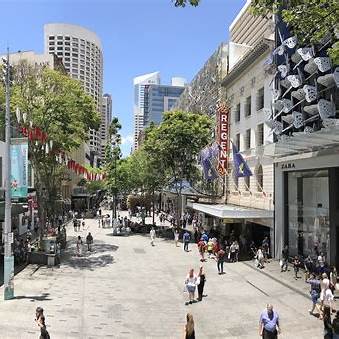
A practical note for sellers: city-led enhancements and activations can support trading conditions over time. For example, works and changes to the Queen Street Mall environment have been publicly communicated as part of ongoing uplift and activation.
☕ 2) Food & beverage and service retail (resilience depends on positioning)
The best-performing CBD tenancies tend to be:
convenience-led (repeat visits),
supported by office worker clusters,
or tied to destinations and attractions.
Retail seller tip:
A strong retail investment sale is less about “this is in the CBD” and more about:
the tenant’s trading rationale,
the lease structure and outgoings clarity, and
the re-leasing story if the tenant leaves.
🏭 Industrial/logistics: why it still influences Brisbane CBD investors
Even though Brisbane City itself isn’t an industrial precinct, industrial performance matters because it shapes where investors allocate capital. When industrial is perceived as stable, it can pull investor attention away from office/retail; when it stabilises, capital can rotate back into well-leased CBD assets.
Recent national commentary points to industrial cap rates sitting around 5.4% and conditions showing early signs of renewed confidence in parts of the market.
That benchmark matters because CBD assets are priced relative to other options—yield spreads influence buyer decisions.
💰 Yields and buyer demand: selective capital, strong pricing for “clean” deals
In 2026, CBD buyers are still buying—but they’re underwriting harder. The market rewards assets that are:
✅ “Clean” investment-grade fundamentals
📄 Strong lease covenants (or diversified tenant income)
⏳ Comfortable WALE and renewal probability
🧾 Transparent outgoings and minimal “surprise” capex
🧠 Clear leasing story for the next 24 months
⚠️ Deals that get discounted
Short WALE with no reletting plan
Over-rented leases (risk of reversion)
Older buildings with unclear capex/maintenance risk
Assets with complicated vacancy or fit-out challenges
Pricing reality:
Quality assets are still attracting competitive yields, while “hairy” deals need to be priced to compensate for leasing and capex risk.
🚆 Infrastructure & precinct uplift: why Brisbane CBD demand is durable
One reason Brisbane City remains attractive is that it’s not just a property market—it’s a jobs, transport, and services engine.
Brisbane City Council’s published economic facts highlight scale and momentum:
Greater Brisbane GRP estimated at $225 billion (2022–23),
nearly 146,000 registered businesses (2024–25),
and a labour force of 825,000+ (as of June 2025).
On transport and connectivity, Cross River Rail is a major long-term driver, described as a 10.2km rail line with 5.9km of twin tunnels under the Brisbane River and CBD, including four new underground stations.
Whether you’re selling retail, office, or mixed-use, infrastructure like this supports the “why here” story that buyers and tenants care about.
🧩 Practical seller strategy for Brisbane City commercial (what works in 2026)
🏢 If you’re selling an office asset
✅ Lead with building grade, amenity, end-of-trip, and tenancy efficiency
✅ Provide a clean income summary: net rent, outgoings, lease dates, options
✅ Show the “re-leasing plan” even if it’s fully leased (buyers want certainty)
🛍️ If you’re selling retail
✅ Sell the trade story: why this tenant succeeds here
✅ Provide foot traffic/precinct context and frontage value
✅ Make reletting simple: provide a tenant mix plan and target categories
🏗️ If you’re selling a value-add opportunity
✅ Cost it properly: capex scope, timeline, leasing targets
✅ Package “what changes after upgrades” (rent uplift + buyer pool expansion)
✅ Be realistic: value-add sells best when the plan is credible, not aspirational
Call to Action — Norton’s Real Estate
If you’re considering selling a Brisbane City office, retail, mixed-use, strata suite, or commercial investment, we can give you a clear plan on pricing, buyer targeting, and campaign strategy that fits the current market conditions.
Disclaimer
This update is general information only and is not financial, legal, or valuation advice. Commercial property performance varies by asset type, building grade, lease structure, and micro-location. Figures and conditions can change quickly—seek independent advice before acting on this information.